
Overview of Spraying Process for Large Construction Machinery and Metal Frames
The spraying process for large construction machinery and metal frames presents unique challenges due to the size, weight, and complex shapes of the workpieces. Below is an overview of the limitations, solutions, and techniques used in this process.
Key Challenges
1.Large Size and Weight:
Workpieces occupy significant space and are often bulky, making transportation and movement inconvenient.
Large-scale operations require substantial floor space.
2.Complex Shapes:
Irregular and super-large items create difficulties in achieving uniform coating.
Small or hard-to-reach areas may result in blind spots during spraying.
3.High Processing Demands:
Equipment must meet stringent requirements for durability, corrosion resistance, and surface finish.
Turnover and handling are more labor-intensive compared to smaller products.
Spraying Techniques
- Sandblasting and Dust Removal
Purpose: Prepares the surface by removing rust, scale, and contaminants to ensure better paint or powder adhesion.
Process Flow:
Upper part → Sandblasting → Dust removal → Coating. - Paint Spraying and Drying
Types of paint:
Natural Drying Type: Suitable for products that do not require rapid turnaround.
Low-Temperature Drying Type: Speeds up curing and is ideal for large-scale production.
Process Flow:
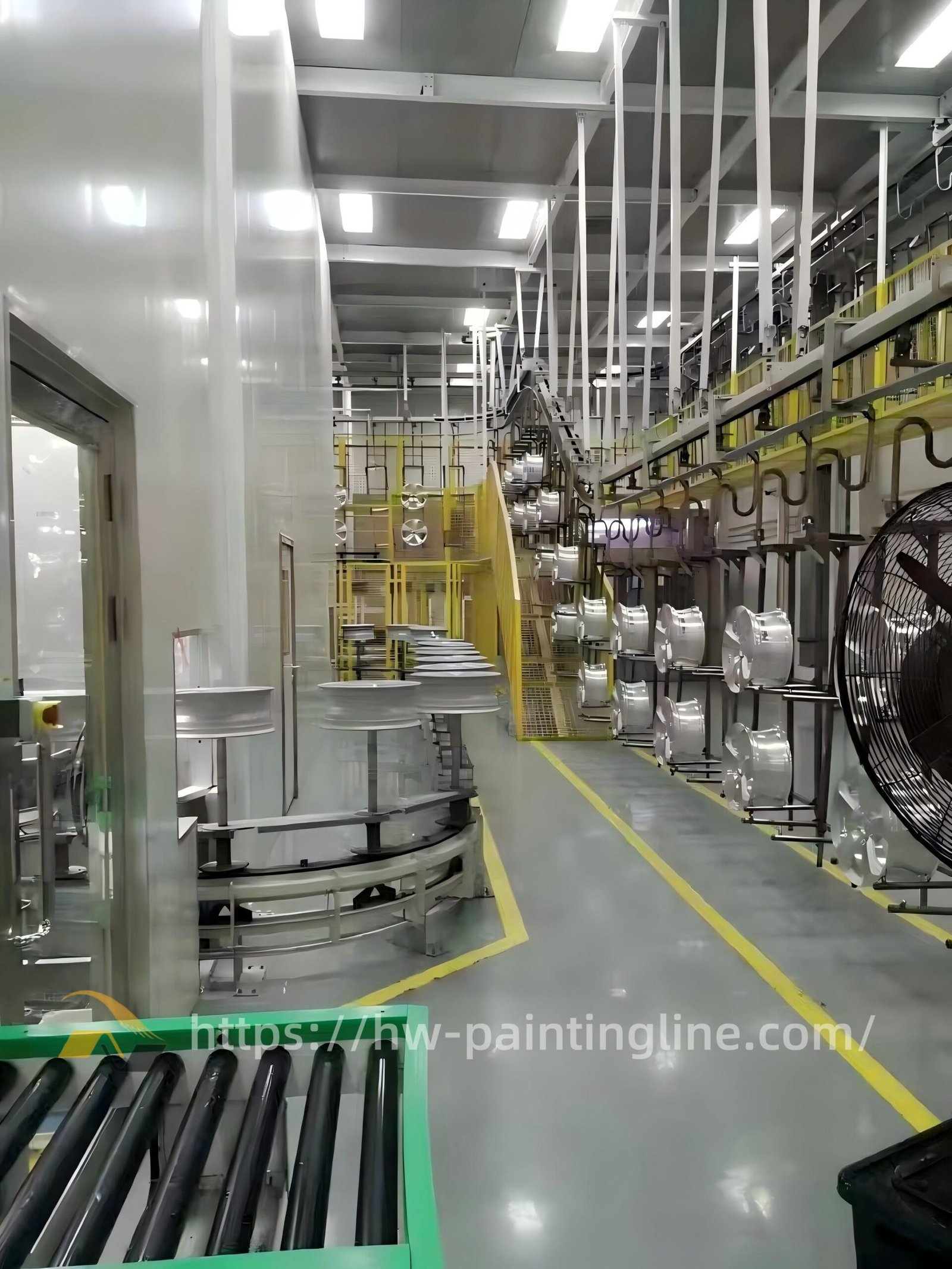
Sandblasting → Dust removal → Paint spraying → Paint drying → Cooling → Lower part.
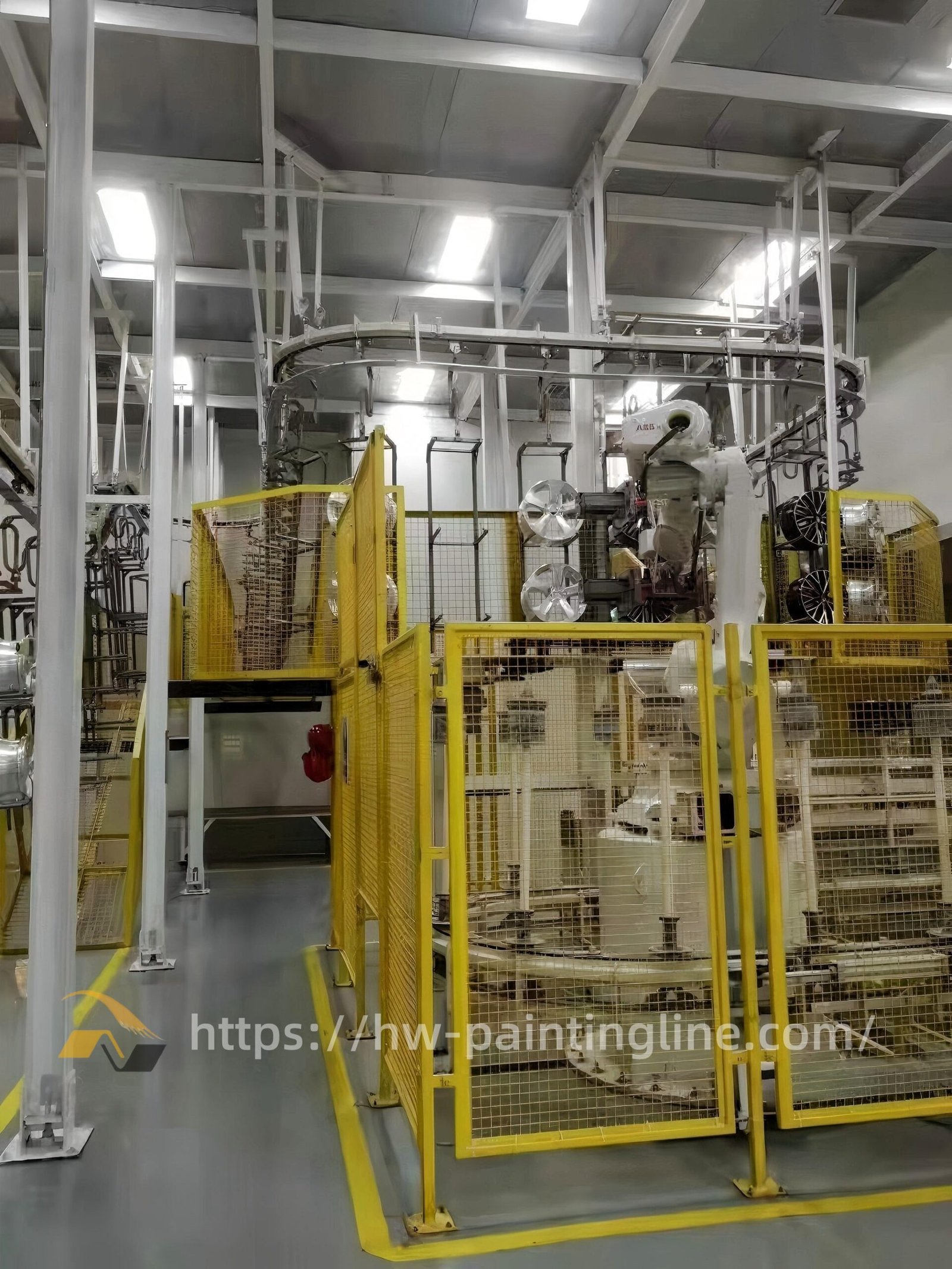
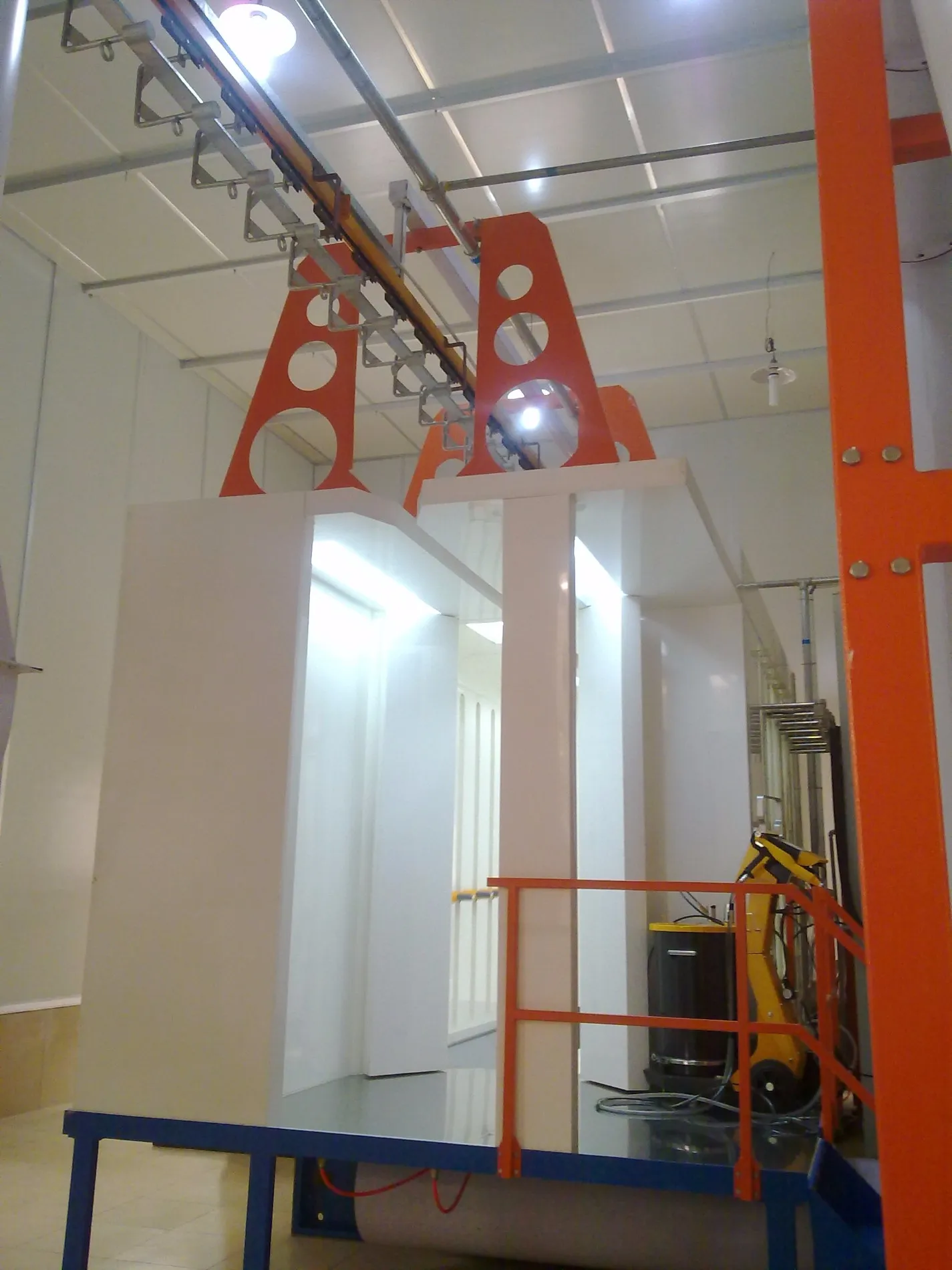
Applications: Agricultural machinery, construction machinery, train boxes, motor car boxes, aircraft parts, wind turbine blades, and other large-scale products. - Electrostatic Powder Spraying
Advantages:
No water or air pollution, making it an environmentally friendly option.
High powder utilization rate and fast efficiency.
Superior anti-corrosion performance in harsh environments.
Process Flow:
Upper part → Sandblasting → Dust removal → Powder spraying → Powder drying (at ~180°C) → Cooling → Lower part.
Applications: Super-large and irregularly shaped products that require enhanced durability and corrosion resistance.
Transportation Methods - Flat Car Transportation
Features:
Suitable for bulky, unsupported products or those without hanging points.
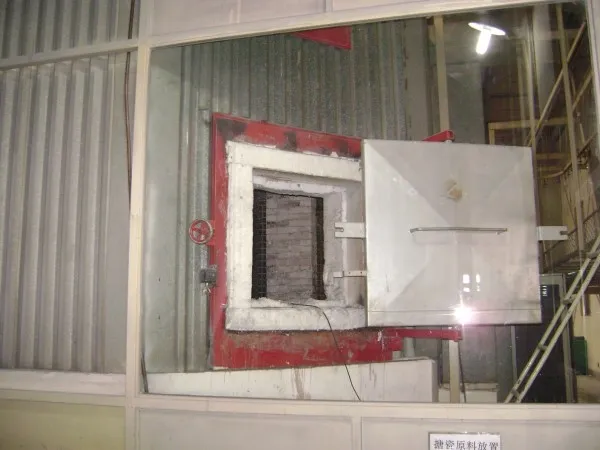
Flat cars transport workpieces into the curing furnace.
Requires careful power separation to prevent electrical components from entering the furnace.
Drawbacks:
Limited access to the bottom of the product, leading to blind spots.
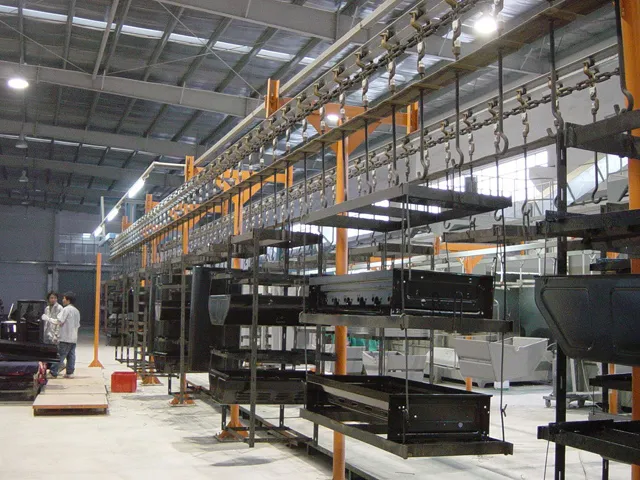
Less efficient for operations requiring full coverage. - Suspension Conveying
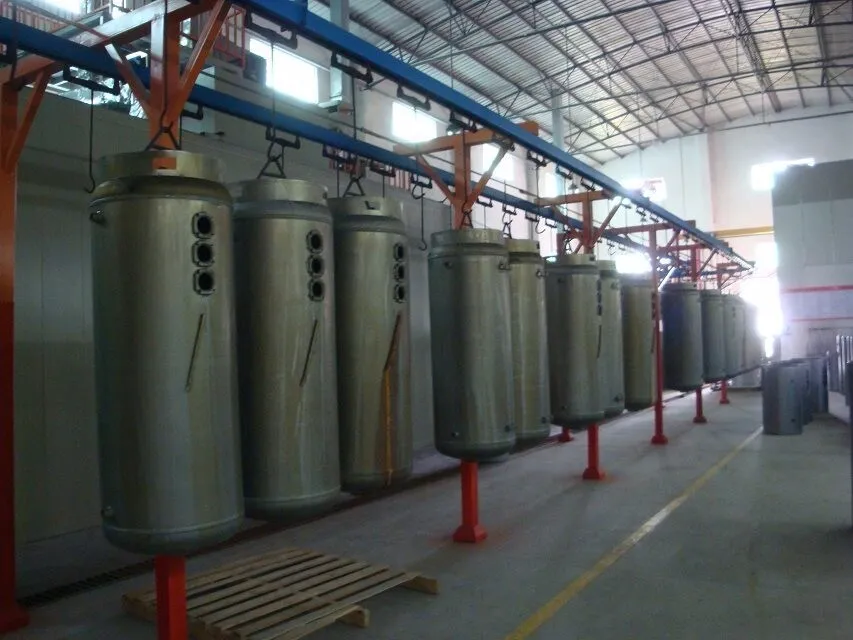
Features:
Efficient for hanging products with proper hanging points.
Allows for better access to all sides of the workpiece, reducing blind spots.
Ideal for high-volume operations in tall factory buildings with adequate chain systems.
Requirements:
High ceilings for suspension systems.
Strong chains and support structures to handle heavy loads. - Powder Spraying Process for Large Construction Machinery
Steps:
Upper part → Sandblasting → Dust removal → Powder spraying → Powder drying → Cooling → Lower part.
Powder Drying:
Requires a curing temperature of approximately 180°C.
Flat cars or suspension lines are used to transport products into the curing furnace. - Paint Spraying Process for Large Construction Machinery
Steps:
Upper part → Sandblasting → Dust removal → Paint spraying → Paint drying → Cooling → Lower partSuitable for:
Large machinery, metal frames, and industrial components requiring durable coatings.